10kW Solar System: Yearly Output, Panels Needed and 2026 Cost
Short answer
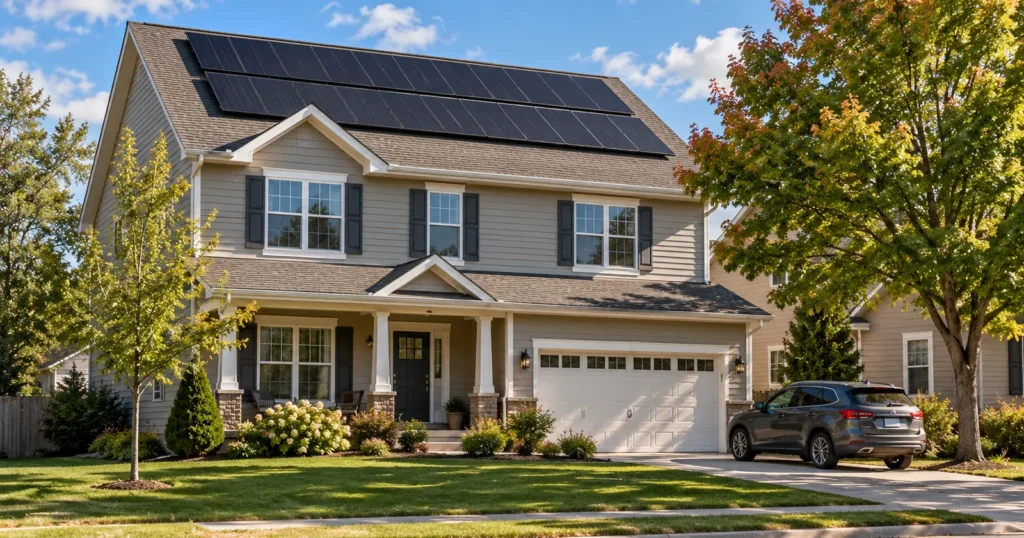
A 10kW solar system makes about 11,000 to 16,000 kWh a year in most of the US, or roughly 30 to 44 kWh a day, enough for a home using 900 to 1,300 kWh a month. It takes 24 panels at 430 W and about 500 square feet of panel area. Typical installed cost in late 2026 is $22,000 to $32,000, usually with a 7.6 kW or 10 kW inverter.
Ten kilowatts is the size most US homeowners ask about first. It sits just above what an average house needs, so it suits a family home with central air, or an average home that has added an electric car or a heat pump.
What quotes rarely explain is how much the same 10 kW makes in Seattle versus Phoenix, why many installers pair it with a 7.6 kW inverter instead of a 10 kW one, and how to size a battery around it. This guide covers all three with the math shown.
How much does a 10kW solar system produce in your city?
A 10 kW rating is the panels’ combined output in lab conditions. Real output depends on how many hours of strong sun you get. This site plans with 80% system efficiency to cover heat, wiring, dust and inverter losses.
Example in Denver: 10 × 5.3 × 0.80 × 365 = 15,476 kWh a year
The last column compares each result with the average US home, which the US Energy Information Administration puts at 10,791 kWh a year, or about 899 kWh a month.
| City | Peak sun hours | kWh per day | kWh per month | kWh per year | Share of average home |
|---|---|---|---|---|---|
| Phoenix, AZ | 6.3 | 50.4 | 1,533 | 18,396 | 170% |
| Los Angeles, CA | 5.5 | 44.0 | 1,338 | 16,060 | 149% |
| Denver, CO | 5.3 | 42.4 | 1,290 | 15,476 | 143% |
| Dallas, TX | 5.0 | 40.0 | 1,217 | 14,600 | 135% |
| Boston, MA or Minneapolis, MN | 4.6 | 36.8 | 1,119 | 13,432 | 124% |
| US middle value | 4.5 | 36.0 | 1,095 | 13,140 | 122% |
| Chicago, IL | 4.4 | 35.2 | 1,071 | 12,848 | 119% |
| Detroit, MI | 4.3 | 34.4 | 1,046 | 12,556 | 116% |
| Seattle, WA | 3.7 | 29.6 | 900 | 10,804 | 100% |
Sun hours are approximate yearly averages for south-facing panels at a sensible tilt. Monthly figures are yearly averages; summer months run higher and winter months lower, especially in northern states. For your exact roof, NREL’s PVWatts calculator uses local weather data, and the solar panel output calculator gives a quick daily and monthly figure from your sun hours.
Is 10 kW the right size for your bill?
Turn the formula around to find the size your usage calls for.
Example: 13,000 kWh ÷ (4.5 × 0.80 × 365) = 13,000 ÷ 1,314 = 9.9 kW
So a home using about 1,080 kWh a month needs close to 10 kW at the US middle value. The same home needs only about 7.1 kW in Phoenix (13,000 ÷ 1,840) but about 12 kW in Seattle (13,000 ÷ 1,080). If your number lands nearer 12, the 12kW solar system guide walks through that step up.
How many solar panels are in a 10kW system?
Divide 10,000 W by the panel rating and round up. Panel efficiency sets how much roof the array covers.
Example: 10,320 W ÷ (1,000 × 0.22) = 46.9 m², about 505 sq ft
| Panel rating | Panels needed | Actual array size | Panel area |
|---|---|---|---|
| 400 W (about 20% efficient) | 25 | 10.00 kW | about 538 sq ft |
| 430 W (about 22% efficient) | 24 | 10.32 kW | about 505 sq ft |
| 450 W (about 22% efficient) | 23 | 10.35 kW | about 506 sq ft |
Older guides list 28 to 40 panels for 10 kW because they assume 250 W to 360 W panels. A 2026 quote for 10 kW should show roughly 23 to 25 panels.
Fire-code pathways, ridge setbacks and vents mean you need more clear roof than panel area. Plan on about 600 to 700 square feet of usable roof facing south, east or west. The solar panel roof area calculator checks whether 24 panels fit your roof planes.
Which inverter goes with a 10kW solar system: one 10 kW unit or 7.6 kW?
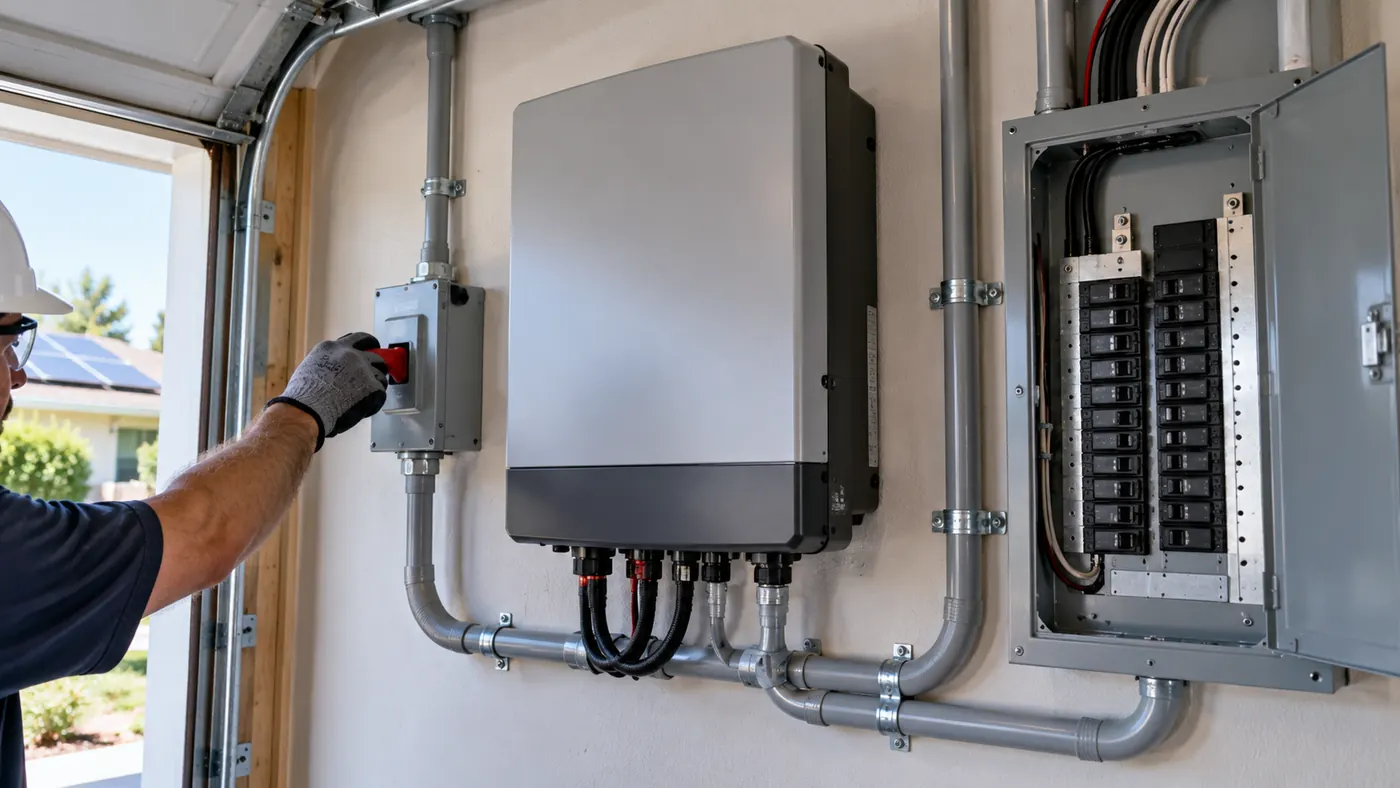
This is where 10 kW quotes differ most. The panels are rated in DC watts, the inverter in AC watts, and the two do not have to match. The DC-to-AC ratio compares them.
Example: 10.32 kW ÷ 7.6 kW = 1.36
Heat and sun angle keep roof panels below their lab rating, so a 10 kW array is often matched to a smaller inverter. The trade-off is clipping: on cool, clear days around noon the array can make more than 7.6 kW, and the inverter caps output at its rating. Those lost midday peaks are usually a small slice of the year’s energy, and PVWatts lets you model it by entering your inverter size.
| Inverter setup | DC-to-AC ratio | AC current at 240 V | Solar breaker (×1.25) | Best fit |
|---|---|---|---|---|
| One 7.6 kW string inverter | 1.36 | 31.7 A | 40 A | 200 A panel with 200 A main, one or two roof planes |
| One 10 kW string inverter | 1.03 | 41.7 A | 60 A | Little clipping; panel with spare capacity |
| 24 microinverters at 290 W AC (assumed) | 1.48 | 29.0 A | 40 A | Shaded or multi-plane roofs |
| Hybrid battery inverter, 11.5 kW class | 0.90 | 47.9 A | 60 A | Backup now or soon |
Why your electrical panel often decides
The National Electrical Code’s 120% rule limits how much solar breaker a panel’s busbar can take. For the most common US setup, a 200 A busbar with a 200 A main breaker:
Example: (200 × 1.2) – 200 = 40 A
A 7.6 kW inverter needs exactly a 40 A breaker, so it fits with no extra electrical work. A 10 kW inverter needs 60 A, which means a line-side tap, a smaller main breaker, or a new panel. That extra work can cost more than the energy lost to clipping, which is why 7.6 kW is such a common pairing for a 10 kW array. Check your own numbers with the inverter size calculator.
If you are shopping for an off-grid or battery-first 10 kW inverter instead, the question changes to surge, battery current and which loads it can start. The 10kW inverter guide covers that side.
Why does 10 kW of inverter matter to your utility?
This is a detail only the 10 kW size runs into. Interconnection rules often have a fast lane for small, certified inverter systems. The federal model procedures include a “10 kW Inverter Process,” and many state rules use similar small-system tiers, though the cut-off varies by state and utility.
Utilities usually count the inverter’s AC rating, not the panels’ DC rating. A 10.32 kW array on a 7.6 kW inverter is a 7.6 kW system on the application. A 10 kW array on an 11.5 kW hybrid inverter may count as 11.5 kW and fall into a slower tier with a higher fee. Ask your installer which tier your design lands in before you sign.
How much does a 10kW solar system cost in 2026?
Typical US installed prices in late 2026 run about $2.20 to $3.20 per watt before state or utility incentives. That puts a 10 kW system at about $22,000 to $32,000, with most quotes in the mid-$20,000s.
| Price per watt | 10kW system cost | Typical situation |
|---|---|---|
| $2.20 | $22,000 | Simple roof, competitive market such as Texas or Florida |
| $2.60 | $26,000 | Middle of the market |
| $3.20 | $32,000 | Tile roof, several planes, high labor cost such as the Northeast |
Panel upgrades, line-side taps, tree work and reroofing are often quoted separately, so read the line items.
Homeowners cannot count on a federal credit. The IRS says the residential clean energy credit is not available for property placed in service after December 31, 2025, so budget the full price. Leases and power purchase agreements run under business tax rules, so ask a tax adviser how any credit built into those contracts is handled.
Payback on a 10 kW system
These examples use $26,000 and 13,140 kWh a year at the US middle value. Electricity prices are assumptions; use the rate on your own bill.
Example: 13,140 × $0.17 = $2,234 a year; $26,000 ÷ $2,234 = 11.6 years
| How your utility credits solar | Yearly savings | Payback |
|---|---|---|
| Full net metering at $0.17 per kWh | $2,234 | 11.6 years |
| Full net metering at $0.13 per kWh | $1,708 | 15.2 years |
| 60% used at home at $0.17, 40% exported at $0.06 | $1,656 | 15.7 years |
The table leaves out rate rises, panel degradation and financing costs. The solar payback calculator adds those for your own tariff.
What size battery pairs with a 10kW solar system?
Size the battery for the energy you use after sunset, not for the array. A 10 kW array makes far more in a sunny day than most homes can store.
Example: 12 kWh ÷ 0.90 = 13.3 kWh nominal
Take a home using 30 kWh a day, with 12 kWh of that used after dark. At the US middle value the array makes about 36 kWh a day. If 18 kWh is used directly in daylight, about 18 kWh is left over, enough to refill a 13.3 kWh battery with roughly 4.7 kWh still exported. In December up north the surplus can disappear, so the battery may not fill every day.
| Goal | Typical battery size | What sets the size |
|---|---|---|
| Cut evening grid use under time-of-use rates | 10 to 15 kWh | kWh used from 4 pm to bedtime |
| Back up essentials (fridge, lights, internet, furnace fan) | 10 to 15 kWh | Hours of outage you want to ride through |
| Whole-home backup with central air | 20 to 30 kWh | Battery inverter power and AC starting surge |
The battery’s own inverter rating limits what runs during an outage. A 10 kW array does not give you 10 kW of backup power; the battery system does. The battery calculator sizes a bank from your loads and backup hours.
What mistakes do buyers make with 10kW quotes?
- Comparing DC with AC. One quote says 10 kW meaning panels, another says 10 kW meaning inverter. Compare the panel count, panel wattage and inverter model line by line.
- Judging by panel count alone. 24 panels at 430 W and 25 at 400 W are both about 10 kW. Price per watt is the fair comparison.
- Ignoring the export rate. Where exports earn far less than retail, a 10 kW array on a home that needs 8 kW pays back more slowly. Size for your use, not for the biggest roof.
- Skipping the panel check. Ask early whether your design needs a 60 A breaker; a surprise panel upgrade changes the whole quote.
Frequently asked questions
How many kWh does a 10kW solar system produce per month?
About 920 to 1,330 kWh a month on a yearly average in most of the US. At the US middle value of 4.5 peak sun hours, 10 kW × 4.5 × 0.80 = 36 kWh a day, or about 1,095 kWh a month. Phoenix averages about 1,530 kWh and Seattle about 900, with summer months well above winter.
What size inverter do I need for a 10kW solar system?
Usually 7.6 kW to 10 kW of AC inverter capacity, a DC-to-AC ratio of about 1.0 to 1.36. A 7.6 kW inverter needs a 40 A breaker and fits a standard 200 A panel under the 120% rule. A 10 kW inverter clips less but needs a 60 A breaker, which often means extra electrical work.
Can a 10kW solar system run a whole house?
Over a year, yes for most homes: it makes 11,000 to 16,000 kWh against an average of about 10,800 kWh. It cannot run the house at night or in an outage on its own. That needs a battery, and the battery’s inverter rating, not the array size, decides how many appliances run at once.
How much roof space does a 10kW solar system need?
About 500 to 540 square feet of panels, depending on panel efficiency. With 430 W panels that is 24 panels covering about 505 square feet. Setbacks, pathways and vents mean you should plan on roughly 600 to 700 square feet of usable roof facing south, east or west.
How long does a 10kW solar system take to pay for itself?
Roughly 11 to 16 years at the US middle value, using a $26,000 price and electricity at $0.13 to $0.17 per kWh. Payback is faster with high rates or full net metering, and slower where exports earn little. Homeowners cannot claim the 30% federal credit for systems placed in service after 2025, which lengthens payback compared with older estimates.


