Solar guides
Plain-English explainers on solar sizing, costs, batteries and wiring, each linked to a calculator so you can check the numbers.
Wiring and electrical, 6 min read
16 Gauge Wire Amp Rating: Safe Load and Common Uses
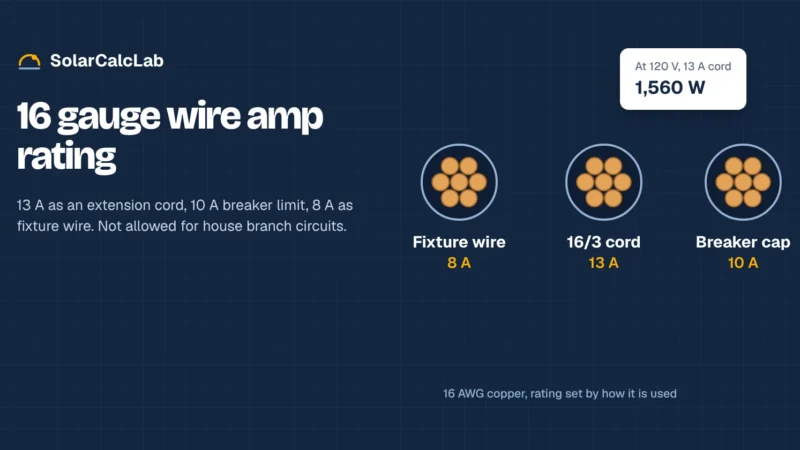
16 AWG copper is rated 13 A as an extension cord, 10 A at the breaker and 8 A as fixture wire. Here is how far you can run it on cords, 12 V DC and speakers.
Solar basics, 7 min read
What Will a 100 Watt Solar Panel Run?
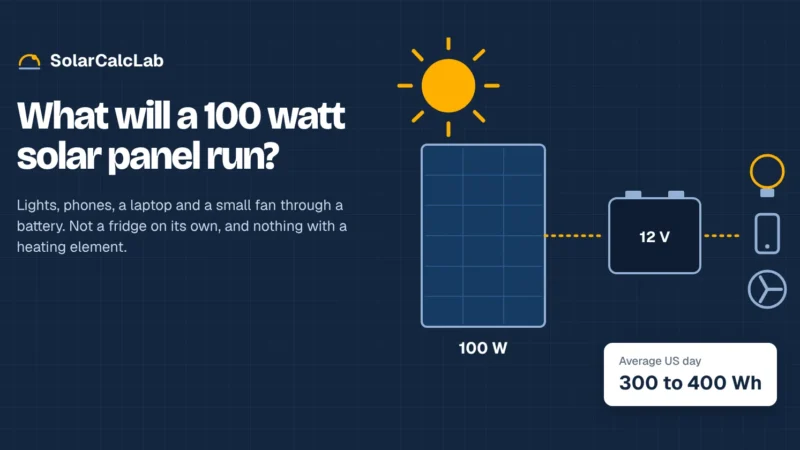
A 100 watt solar panel puts about 300 to 400 Wh a day into a battery. Here is what that runs, device by device, and where one panel falls short.
Wiring and electrical, 7 min read
2 Gauge Wire Amp Rating: Ampacity, Uses and Max Distance
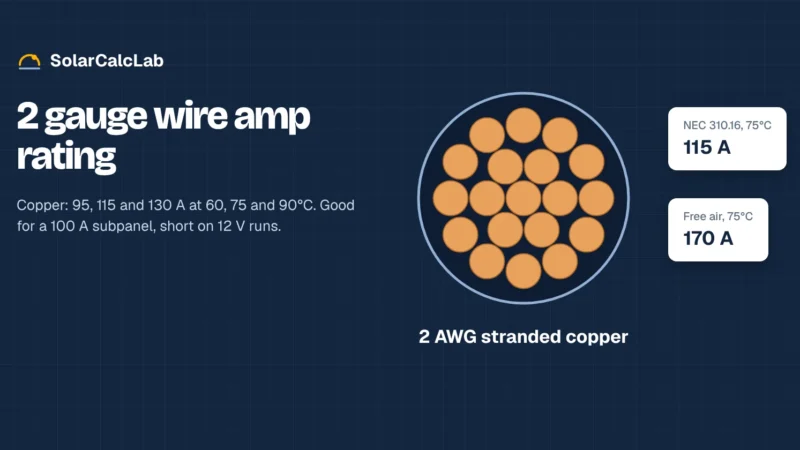
2 AWG copper wire is rated 115 amps at 75°C, enough for a 100 amp subpanel. This guide covers every rating, common uses and the maximum run length at 240 V and on DC.
Solar basics, 8 min read
MPPT vs PWM Charge Controller: Which One Should You Use?
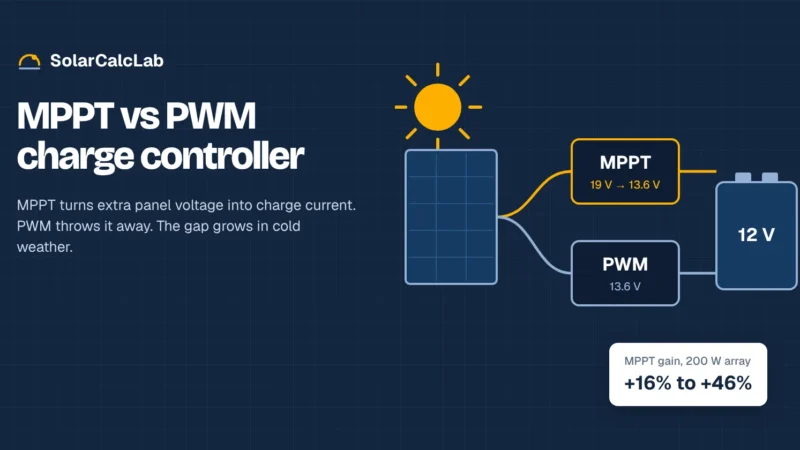
MPPT controllers turn extra panel voltage into charge current, while PWM throws it away. Here is how big the gap really is, and when the cheaper PWM still makes sense.
Wiring and electrical, 6 min read
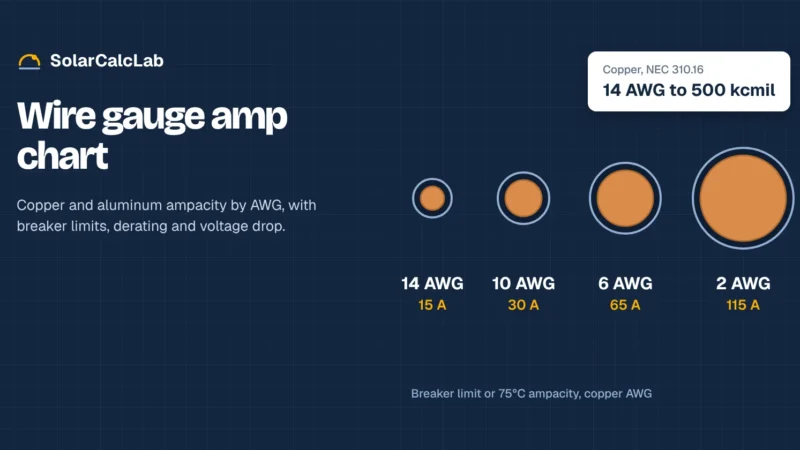
Wire Gauge Amp Chart: AWG Ampacity for Copper and Aluminum
Copper and aluminum ampacity for every common AWG size from NEC Table 310.16, plus wire size by breaker, derating for heat and bundling, and voltage drop limits.
Solar basics, 7 min read
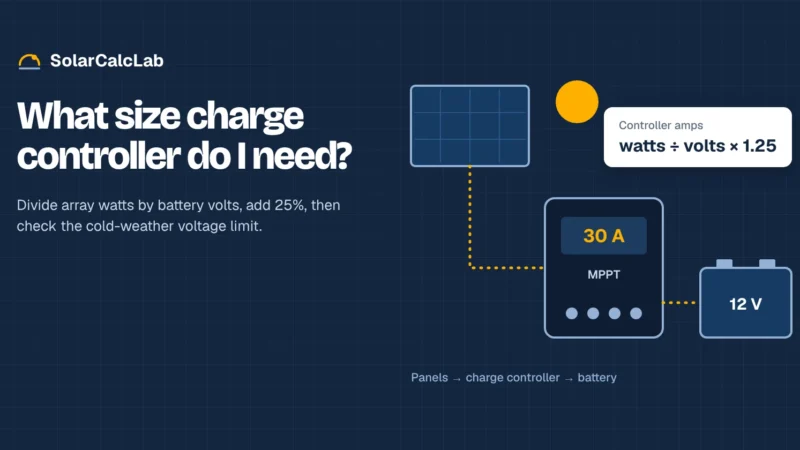
What Size Charge Controller Do I Need?
Charge controller size comes from array watts divided by battery voltage, plus a cold-weather voltage check. Here is a lookup table and three worked sizing scenarios.
Wiring and electrical, 7 min read
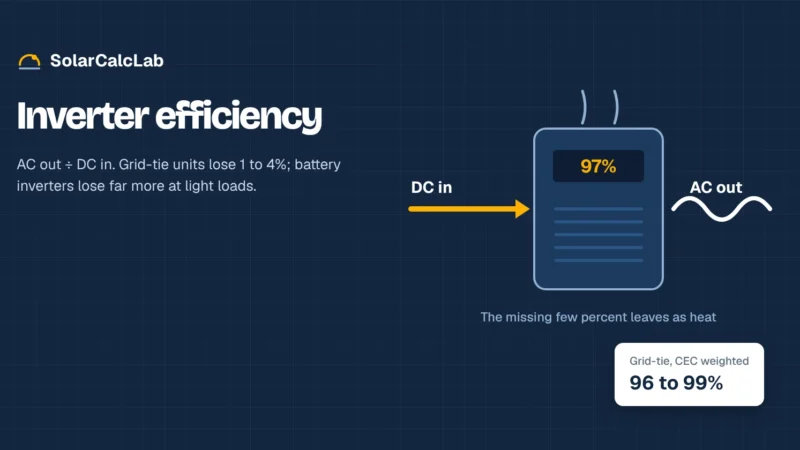
Inverter Efficiency: What It Means and How Much Power You Lose
What inverter efficiency ratings mean, how CEC weighted efficiency is calculated, what a percentage point is worth in dollars, and why battery inverters waste so much at light loads.
Solar basics, 7 min read
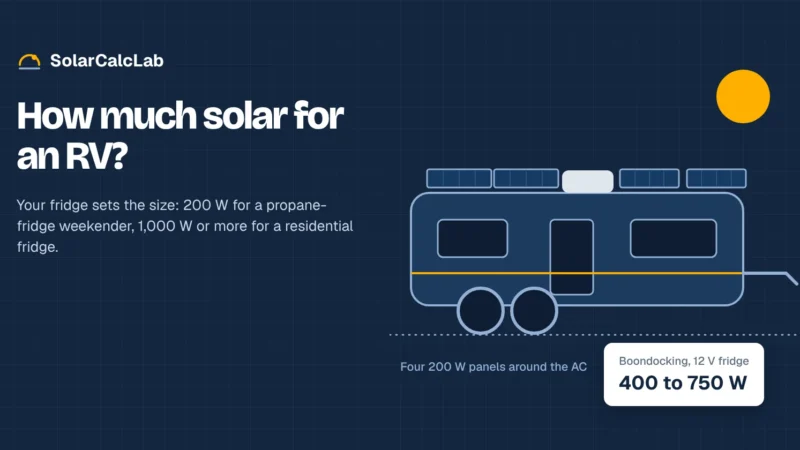
How Much Solar Do I Need for an RV?
How many watts of solar your RV needs depends mostly on your fridge. See panel and battery sizes for four RV power profiles, roof space limits and why air conditioning rarely runs on solar alone.
Wiring and electrical, 7 min read
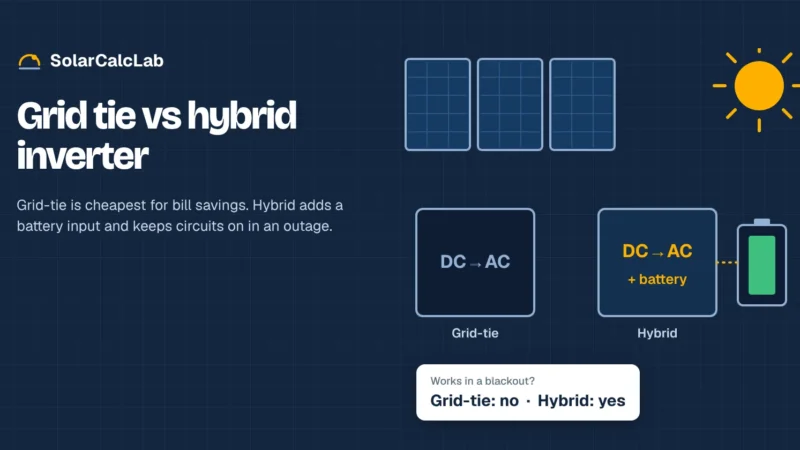
Grid Tie vs Hybrid Inverter: Which Do You Need?
Grid-tie inverters are the cheapest way to cut a bill, while hybrid inverters add a battery input and outage backup. Here is how to choose, including retrofits and coupling losses.

Solar basics, 8 min read
Off-Grid Solar System: How to Size Panels, Batteries and Inverter
How to size an off-grid solar system from your load list: battery days of autonomy, panels for the worst winter month, inverter surge, wiring and a full worked example.

Wiring and electrical, 7 min read
4kW Inverter: Output, Uses and Matching Solar Array
A 4kW inverter can be a grid-tie, hybrid or off-grid unit. How many panels fit, why US models stop at 3.8 kW, battery current on 48 V and the idle draw to check.
Batteries, 7 min read
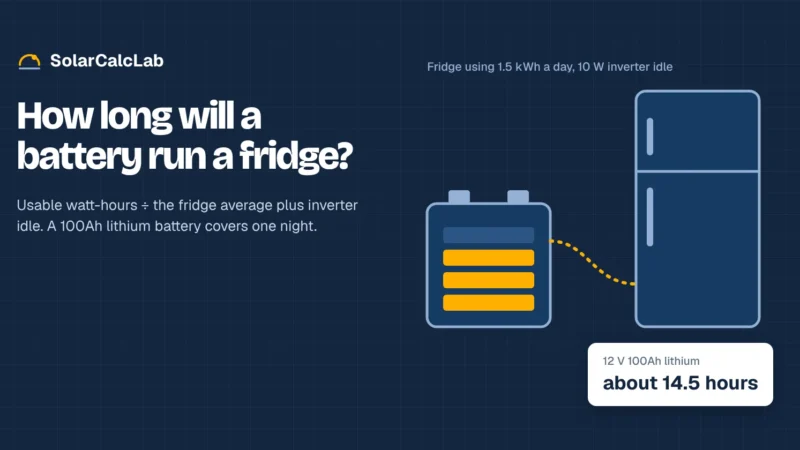
How Long Will a Battery Run a Refrigerator?
A 12 V 100Ah lithium battery runs a typical refrigerator for about 11 to 20 hours. Runtime chart for six batteries, the formula, and what drains a battery faster than expected.