600W Solar Panel Output per Day: kWh, Size, Weight and What It Runs
Short answer
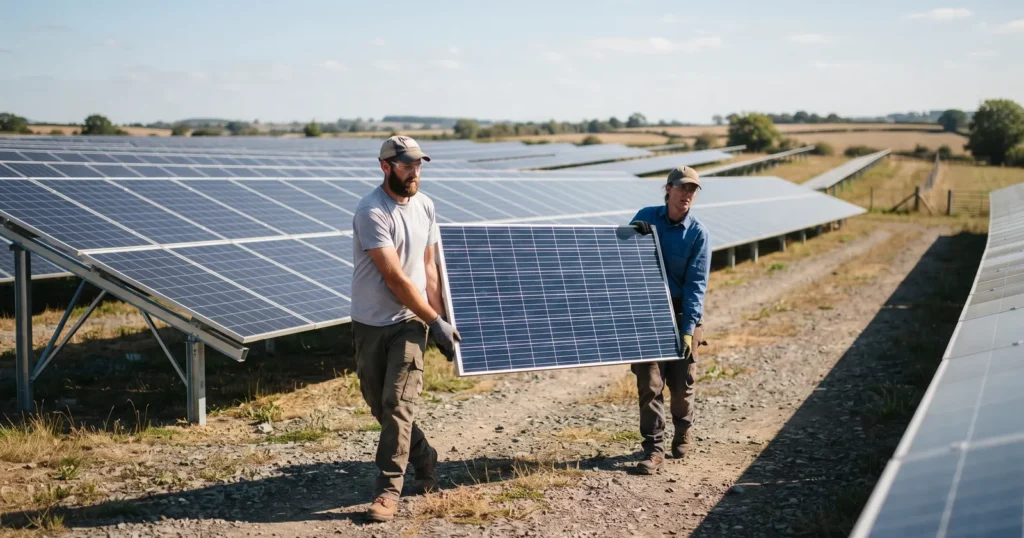
A 600 watt solar panel makes about 2 to 3 kWh of electricity a day in most of the US, or roughly 55 to 90 kWh a month. At 4.5 peak sun hours it averages about 2.2 kWh a day. These are real large-format modules, about 86 × 51 inches and 67 to 72 pounds, built mainly for commercial roofs and solar farms rather than homes.
A 600 W solar panel sounds like an easy way to get more power from fewer modules. One does the work of nearly one and a half standard home panels, often at a lower price per watt. The catch is that these panels were designed for solar farms, and their size and electrical ratings do not always suit a house.
Below: real output by US city, how it compares with 440 W, 550 W and 590 W panels, what it weighs and what it can power.
Are 600 watt solar panels real?
Yes. A 600 W rating comes from large-format modules built with 120 half-cut 210 mm silicon cells. Most major manufacturers make them for utility and large commercial projects, where fewer, bigger panels mean less racking and faster installation.
Two published spec sheets give a clear picture of the format:
- Canadian Solar HiKu7 CS7L-600MS: 2,172 × 1,303 × 35 mm (85.5 × 51.3 × 1.38 in), 32.5 kg (71.6 lb), 21.2% efficiency, open-circuit voltage (Voc) 41.3 V and short-circuit current (Isc) 18.47 A.
- Trina Vertex TSM-DE20 series (590 to 610 W): 2,172 × 1,303 × 33 mm, about 30.6 kg (67 lb), with a 600 W version listed at 41.5 V Voc, 18.52 A Isc and 21.2% efficiency.
So a real 600 w solar panel is roughly 7 feet long, more than 4 feet wide and close to 70 pounds. Some sellers also use “600 watt solar panel” for kits of several smaller panels, so check whether a listing is one module or a bundle.
How many watts are in a typical solar panel?
Residential panels are mostly rated 400 to 450 watts, and this site uses 430 W as its standard. Panels of 540 to 610 W are commercial and utility sizes, and the largest utility modules exceed 700 W. Wattage tracks size: at 21% to 22% efficiency, each square meter of panel carries roughly 210 to 220 watts of rating.
How much power does a 600 watt solar panel produce per day?
The 600 W rating is measured under lab conditions: 1,000 watts of sunlight per square meter and a cell temperature of 77°F (25°C). On a real roof, heat, dust, wiring and inverter losses take a share, so this site plans with 80% system efficiency. Daily energy then depends on your peak sun hours, the hours of full-strength sunlight your location gets on an average day.
Example: 0.6 kW × 4.5 hours × 0.80 = 2.16 kWh per day
The table applies that formula to approximate annual average sun hours for panels facing south and tilted near the local latitude. Monthly figures use 30 days and yearly figures use 365 days.
| Location | Peak sun hours | Per day | Per month | Per year |
|---|---|---|---|---|
| Phoenix, AZ | 6.3 | 3.0 kWh | 91 kWh | 1,104 kWh |
| Los Angeles, CA | 5.5 | 2.6 kWh | 79 kWh | 964 kWh |
| Denver, CO | 5.3 | 2.5 kWh | 76 kWh | 929 kWh |
| Dallas, TX or Miami, FL | 5.0 | 2.4 kWh | 72 kWh | 876 kWh |
| US middle value | 4.5 | 2.2 kWh | 65 kWh | 788 kWh |
| New York, NY or Chicago, IL | 4.4 | 2.1 kWh | 63 kWh | 771 kWh |
| Seattle, WA | 3.7 | 1.8 kWh | 53 kWh | 648 kWh |
That matches the rule that 1 kW of panels makes about 1,100 to 1,600 kWh a year in most of the US. Summer days run higher and winter days lower. For an estimate based on your exact address, tilt and direction, the free NREL PVWatts calculator uses hourly weather data, or you can find your sun hours with the peak sun hours calculator and convert them in the solar panel output calculator.
How does a 600 W panel compare with 440 W, 550 W and 590 W panels?
The table below compares four common sizes using published spec sheets for size and weight, and the 4.5 peak sun hour formula above for output. The 440 W is a residential module, the 550 W uses 182 mm cells, and the 590 W and 600 W are the 210 mm modules listed earlier.
| Panel rating | Typical size | Area | Weight | Output per day at 4.5 PSH | Output per year |
|---|---|---|---|---|---|
| 440 W | 69.4 × 44.6 in | 21.5 sq ft | about 48 lb | 1.58 kWh | 578 kWh |
| 550 W | 89.7 × 44.6 in | 27.8 sq ft | about 62 lb | 1.98 kWh | 723 kWh |
| 590 W | 85.5 × 51.3 in | 30.5 sq ft | about 67 lb | 2.12 kWh | 775 kWh |
| 600 W | 85.5 × 51.3 in | 30.5 sq ft | about 67 to 72 lb | 2.16 kWh | 788 kWh |
Output per square foot is nearly identical across all four, because efficiency is similar at 21% to 22%. A 600 W panel does not get more energy out of your roof; it packs it into one larger module. The step from 590 W to 600 W is only about 0.04 kWh a day, and panels in one family share the same frame, so pick by price per watt rather than the last few watts.
Can you put 600 watt solar panels on a house roof?
You can, but most home installers do not, for three practical reasons.
Size, weight and handling
At about 30 square feet and up to 72 pounds, a 600 W module takes two people to carry onto a roof and catches a lot of wind on the way. Its 51 inch width also differs from the 44 to 45 inch panels most residential racking is laid out for, and on a roof broken up by vents and fire setbacks, smaller panels usually fit more total watts. You can check how many fit with the solar panel roof area calculator.
Weight per square foot is similar to smaller panels, about 2.2 to 2.4 pounds, so roof load is not the main problem. Handling, wind area per module and racking rated for that length are.
High current and residential inverters
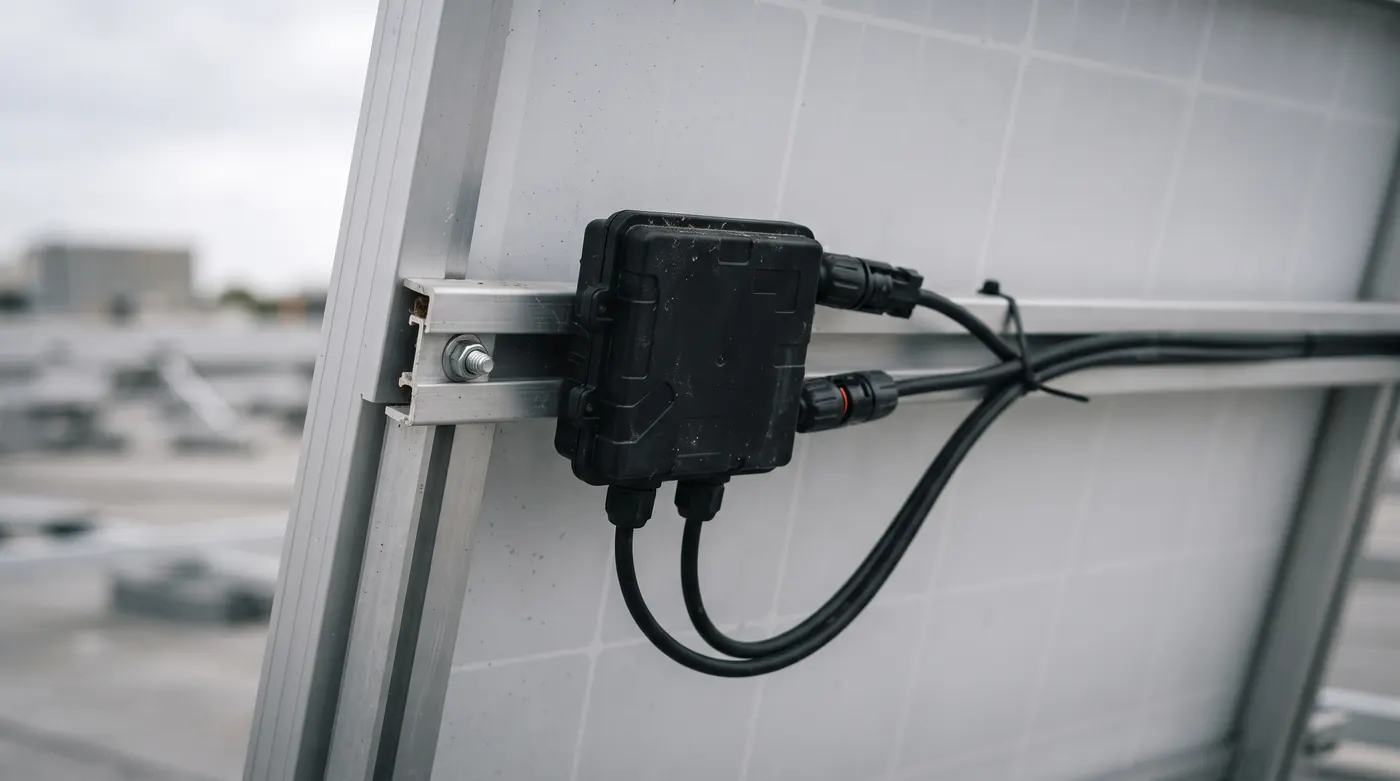
The bigger issue is electrical. A 210 mm cell module runs at a lower voltage but a much higher current than a home panel: the CS7L-600MS lists an operating current of 17.2 A and a short-circuit current of 18.47 A. Many residential microinverters are built for smaller panels. For example, one current US microinverter range lists a maximum continuous input of 12 A and recommended panel pairings that top out around 540 W, with peak AC output below 400 VA. Pair a 600 W panel with a unit like that and much of the panel’s output is clipped and wasted.
String inverters need the same check: if panel current exceeds an MPPT input’s maximum current rating, the inverter limits it. Confirm the maximum input and short-circuit current on the datasheet before buying.
String voltage in cold weather
Panel voltage rises as temperature falls. Inverters and charge controllers have a hard voltage limit, so you size strings for the coldest morning of the year:
Example at 14°F (minus 10°C, which is 35 degrees below 25°C): 41.3 V × (1 + 0.0026 × 35) = 45.1 V per panel
Panels per string on a 600 V inverter: 600 ÷ 45.1 = 13.3, so 13 panels maximum
The 0.26% per °C coefficient comes from the CS7L datasheet; use the figure from your own panel. The solar string size calculator runs both the voltage and current checks for any panel and inverter pair.
What can a 600 watt solar panel run?
About 2.2 kWh a day covers the basics of a cabin, an RV or a small backup circuit:
| Appliance | Use per day | Energy per day |
|---|---|---|
| Energy Star refrigerator | 24 hours, cycling | about 1.2 kWh |
| LED lights, 6 bulbs at 9 W | 5 hours | 0.27 kWh |
| Laptop at 60 W | 6 hours | 0.36 kWh |
| Wi-Fi router at 10 W | 24 hours | 0.24 kWh |
| Total | about 2.1 kWh |
That uses nearly a full day’s output, with no margin for clouds. Off grid, storing one day of output at 90% usable capacity takes about a 2.4 kWh battery, such as a 24 V, 100 Ah LiFePO4 pack.
With a Vmp near 35 V, one 600 W panel suits an MPPT controller on a 12 V battery (up to about 50 A) or 24 V battery (about 25 A), but its voltage is too low to charge a 48 V bank alone.
On a grid-tied home, one panel covers only a sliver of demand. The average US home buys about 10,800 kWh a year, according to EIA residential electricity data, or close to 30 kWh a day. One 600 W panel at 4.5 sun hours supplies about 7% of that.
How many 600 watt solar panels do you need?
Divide the system size by 0.6 kW and round up. The table also shows how many 430 W residential panels the same system would take.
| Target system | 600 W panels | Actual size | Output per day at 4.5 PSH | 430 W panels for comparison |
|---|---|---|---|---|
| 5 kW | 9 | 5.4 kW | 19.4 kWh | 12 |
| 6 kW | 10 | 6.0 kW | 21.6 kWh | 14 |
| 8 kW | 14 | 8.4 kW | 30.2 kWh | 19 |
| 10 kW | 17 | 10.2 kW | 36.7 kWh | 24 |
Example: 30 kWh ÷ (4.5 × 0.80) = 8.33 kW, or 14 panels at 600 W
Fewer panels means fewer connectors, but total area barely changes: 14 large panels cover about 427 sq ft, similar to 20 panels at 430 W. To size a system from your own bill, try the how many solar panels calculator.
How much does a 600 watt solar panel cost?
Large-format panels are usually the cheapest watts on the market because they are made in huge volumes for solar farms. These are typical US ranges in late 2026 and vary with tariffs, brand and order size:
- Panel only, bought by the pallet from a distributor: about $0.25 to $0.50 per watt, or roughly $150 to $300 per 600 W panel.
- Single panel from a retailer: often higher per watt, since a 7 foot module ships by freight truck.
- Installed home solar: about $2.50 to $3.50 per watt overall, whatever the panel size. Labor, inverters, permits and racking make up most of the cost, so cheaper panels move the total only a little.
The 30% federal residential clean energy credit ended for homeowner-owned systems installed after December 31, 2025, so leave it out of a home budget. Business and commercial projects follow different rules; confirm those with a tax adviser. For a full estimate with your own numbers, use the solar panel cost calculator.
When does a 600 W panel make sense?
Large panels shine on ground mounts, flat commercial roofs, carports and off-grid builds where a low price per watt matters more than layout flexibility. For a pitched home roof with microinverters, 400 to 450 W panels are usually the better fit. For a full kilowatt of panels, see our guide to a 1000 watt solar panel setup.
Frequently asked questions
How many kWh does a 600 watt solar panel produce per day?
About 2 to 3 kWh in most of the US. Multiply 0.6 by your peak sun hours and by 0.8 for system losses. At 4.5 sun hours that gives about 2.2 kWh a day, while a sunny desert site with 6.3 sun hours reaches about 3 kWh.
How big is a 600 watt solar panel?
Typical 600 W modules measure about 2,172 × 1,303 mm, or 85.5 × 51.3 inches, which is roughly 30.5 square feet. They weigh about 67 to 72 pounds, depending on frame and glass. Always check the datasheet for the exact model.
Can I use a 600 watt panel with a microinverter?
Only with a microinverter rated for it. These panels run at about 17 A, and many residential microinverters accept around 12 A continuous with recommended pairings up to about 540 W. A mismatch clips output. Check the inverter’s maximum input current and module pairing range first.
How many 600 watt solar panels do I need to power a house?
An average US home using about 30 kWh a day needs roughly 8.3 kW of panels at 4.5 peak sun hours, which is 14 panels at 600 W. Homes with smaller bills or more sun need fewer. The same system takes about 20 residential 430 W panels.
Is a 600 watt panel better than a 440 watt panel?
Not in output per square foot, which is about the same because efficiency is similar. A 600 W panel is often cheaper per watt and needs fewer connections, but it is heavier, harder to handle and less flexible on cut-up roofs. For most homes, 400 to 450 W panels fit better.


