Category: Wiring and electrical
Wire sizing, breakers, ampacity, voltage drop and the electrical basics behind solar and home circuits.
Wiring and electrical, 6 min read
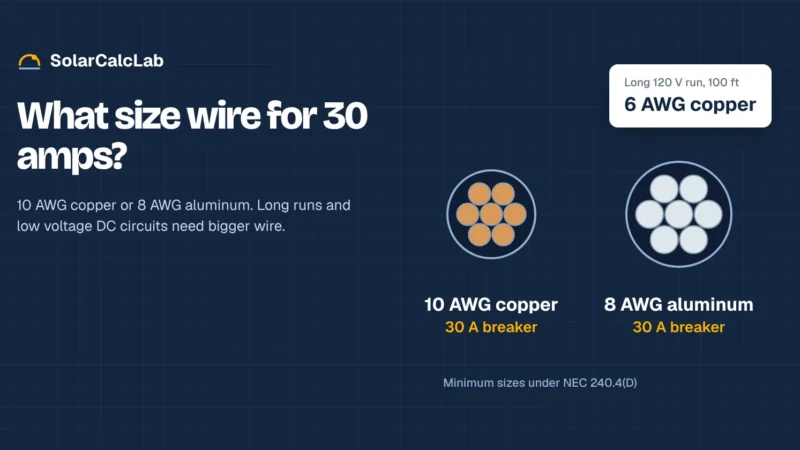
What Size Wire for 30 Amps? Sizes by Job and Distance
A 30 amp circuit takes 10 AWG copper or 8 AWG aluminum. This guide sorts the answer by job, from dryers and RV outlets to EV chargers, long runs and 12 V solar wiring.
Wiring and electrical, 6 min read
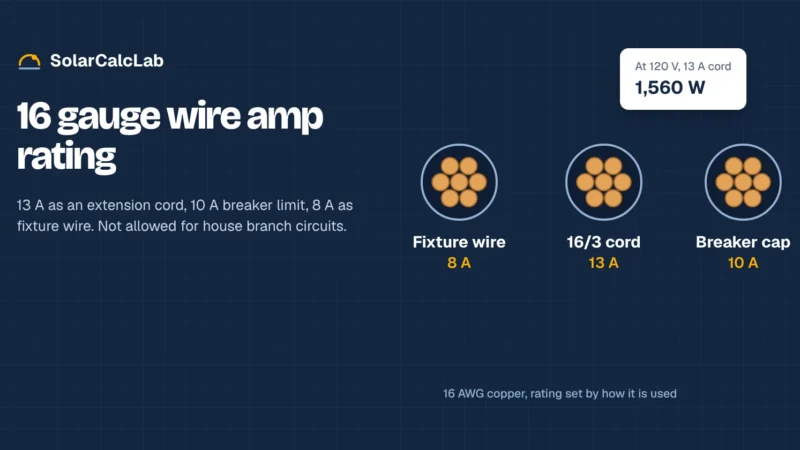
16 Gauge Wire Amp Rating: Safe Load and Common Uses
16 AWG copper is rated 13 A as an extension cord, 10 A at the breaker and 8 A as fixture wire. Here is how far you can run it on cords, 12 V DC and speakers.
Wiring and electrical, 7 min read
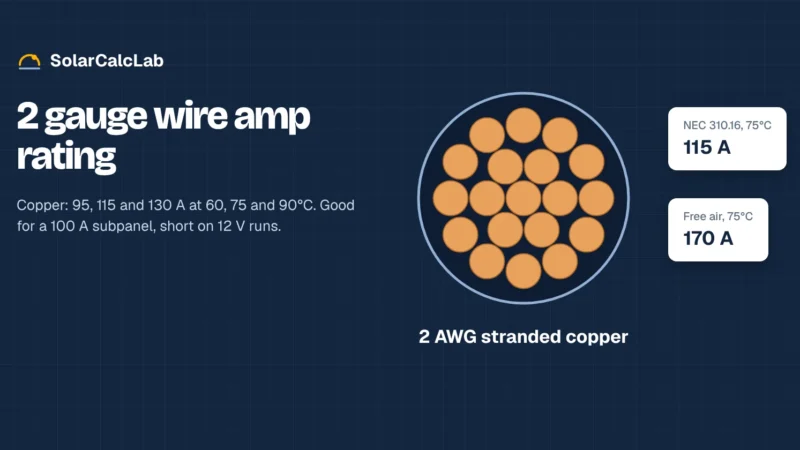
2 Gauge Wire Amp Rating: Ampacity, Uses and Max Distance
2 AWG copper wire is rated 115 amps at 75°C, enough for a 100 amp subpanel. This guide covers every rating, common uses and the maximum run length at 240 V and on DC.
Wiring and electrical, 6 min read
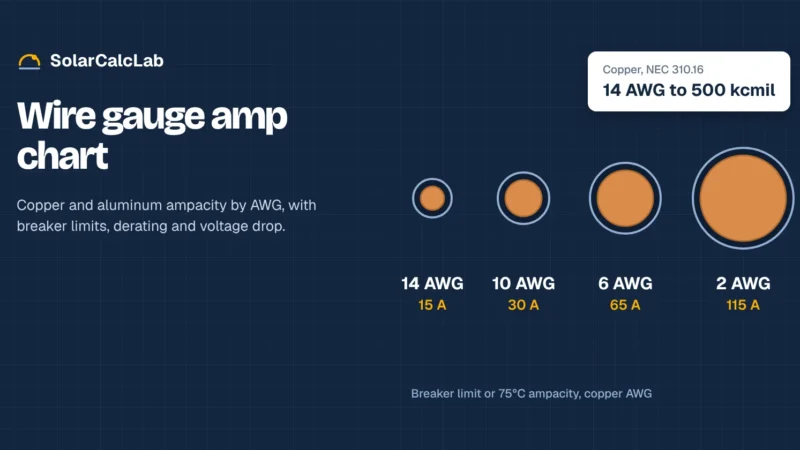
Wire Gauge Amp Chart: AWG Ampacity for Copper and Aluminum
Copper and aluminum ampacity for every common AWG size from NEC Table 310.16, plus wire size by breaker, derating for heat and bundling, and voltage drop limits.
Wiring and electrical, 7 min read
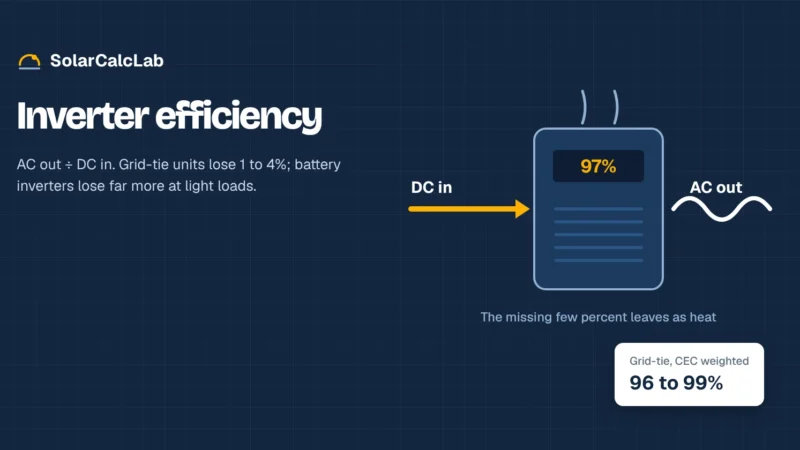
Inverter Efficiency: What It Means and How Much Power You Lose
What inverter efficiency ratings mean, how CEC weighted efficiency is calculated, what a percentage point is worth in dollars, and why battery inverters waste so much at light loads.
Wiring and electrical, 7 min read
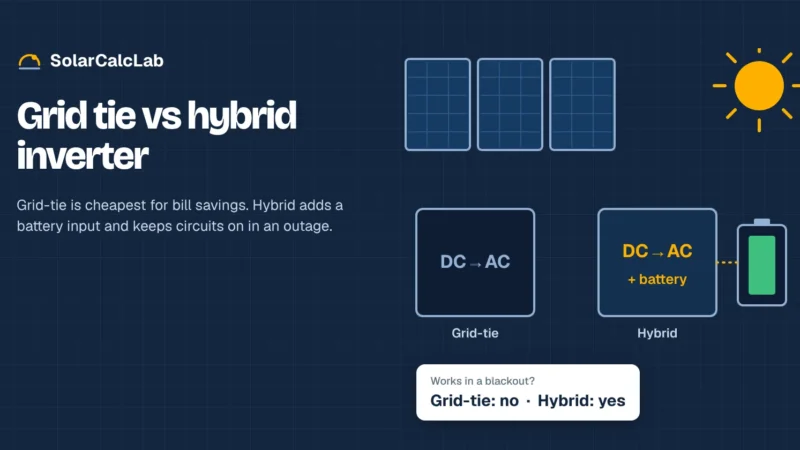
Grid Tie vs Hybrid Inverter: Which Do You Need?
Grid-tie inverters are the cheapest way to cut a bill, while hybrid inverters add a battery input and outage backup. Here is how to choose, including retrofits and coupling losses.

Wiring and electrical, 7 min read
4kW Inverter: Output, Uses and Matching Solar Array
A 4kW inverter can be a grid-tie, hybrid or off-grid unit. How many panels fit, why US models stop at 3.8 kW, battery current on 48 V and the idle draw to check.
Wiring and electrical, 7 min read
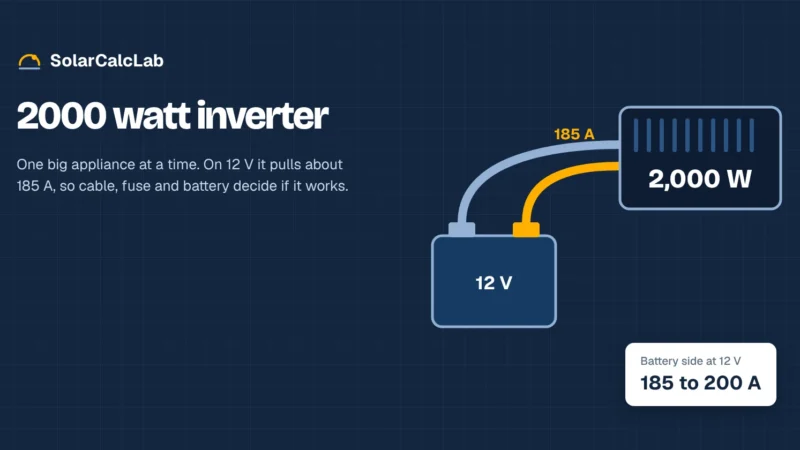
2kW (2000 Watt) Inverter: Loads, Battery and Cable Size
A 2000 watt inverter runs one big appliance at a time and pulls about 185 A from a 12 V battery. Here is what it runs and the cable, fuse and battery it needs.

Wiring and electrical, 7 min read
3kW (3000 Watt) Inverter: What It Runs and Battery Size
A 3,000 W inverter handles about 2,400 W all day, including a microwave, fridge or soft-started RV air conditioner. This guide covers surge, 12 V cable and fuse sizing, and how long each battery bank lasts.

Wiring and electrical, 8 min read
What Size Inverter Do I Need? Sizing Guide With Examples
Add the loads that run together, add 25% headroom, then check motor surge and battery current. Four worked examples, from a camper van to a grid-tied roof.

Wiring and electrical, 7 min read
4 Gauge Wire Amp Rating: How Many Amps Can 4 AWG Carry?
4 AWG copper is rated 70 A at 60°C, 85 A at 75°C and 95 A at 90°C. See which rating applies to NM-B, THHN and aluminum, the right breaker, derating and voltage drop.

Wiring and electrical, 7 min read
14 Gauge Wire Amp Rating: Ampacity Chart and the 15 Amp Rule
14 AWG copper is rated 15 A at 60°C, 20 A at 75°C and 25 A at 90°C, but the NEC caps its breaker at 15 A. See watts, where 14 gauge is not allowed, derating and DC voltage drop.