Solar guides
Plain-English explainers on solar sizing, costs, batteries and wiring, each linked to a calculator so you can check the numbers.
Savings, 7 min read
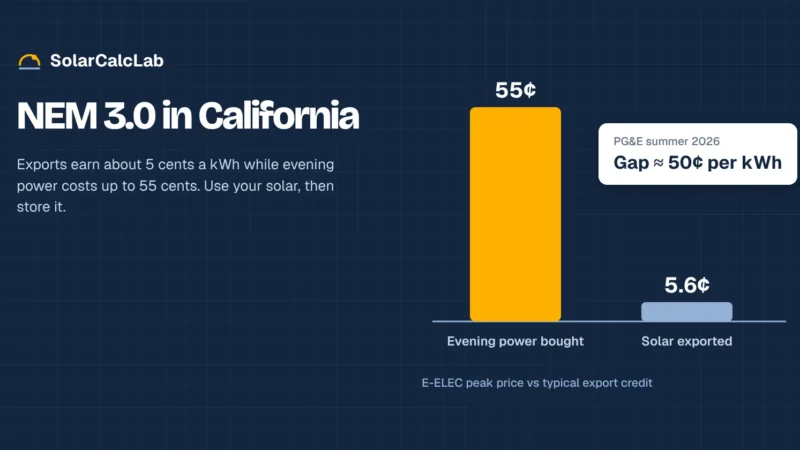
NEM 3.0 in California: What It Means for Solar Owners
California's Net Billing Tariff explained with 2026 PG&E rates: what exports earn, what the ACC Plus adder and new fixed charge do, and when a battery pays off.

Batteries, 8 min read
Do Solar Panels Work During a Power Outage?
Grid-tied solar shuts off in a blackout by design. Here is why, what a battery, SMA Secure Power Supply or Enphase Sunlight Backup can run, and how to troubleshoot a system that stays offline.
Savings, 6 min read
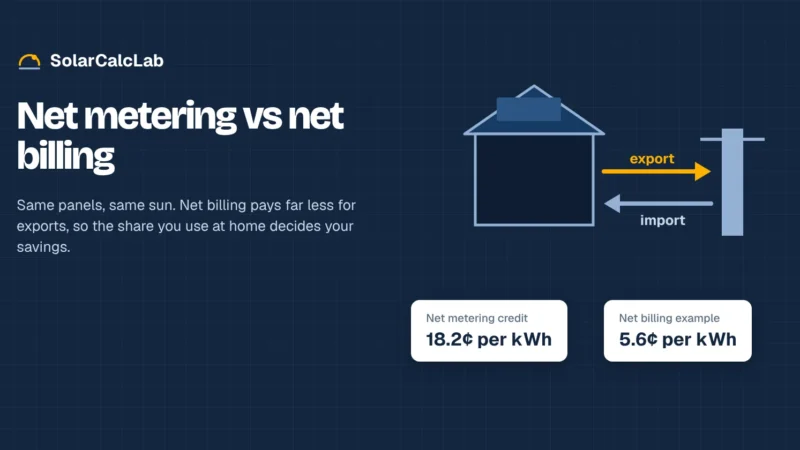
Net Metering vs Net Billing: How Solar Export Credits Differ
How net billing differs from net metering, what the gap does to savings and payback on a 7 kW system, and how to keep more value from your solar.

Batteries, 7 min read
15kWh Battery: How Long It Lasts and What It Powers
What a 15 kWh battery runs and for how long, which products come in that size, how much solar refills it, and what the warranty throughput cap means for daily cycling.
Savings, 6 min read
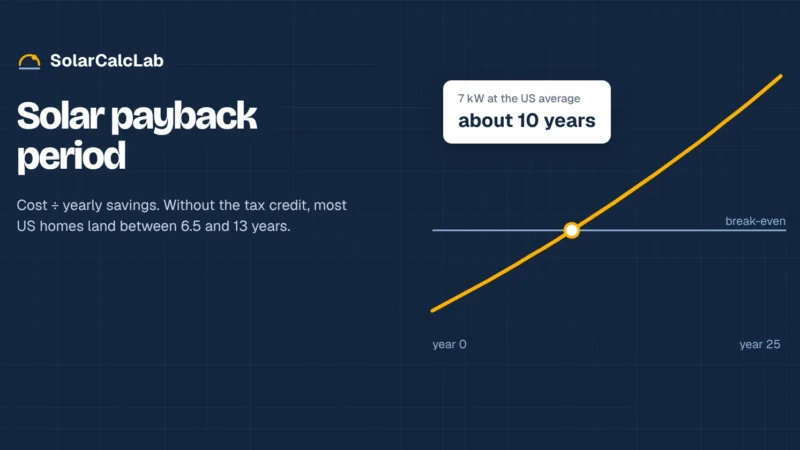
Solar Payback Period: Average Years and How to Calculate It
How to calculate the solar payback period three ways, what it looks like in six US cities with 2026 rates, and how to check an installer's payback estimate.
Batteries, 7 min read
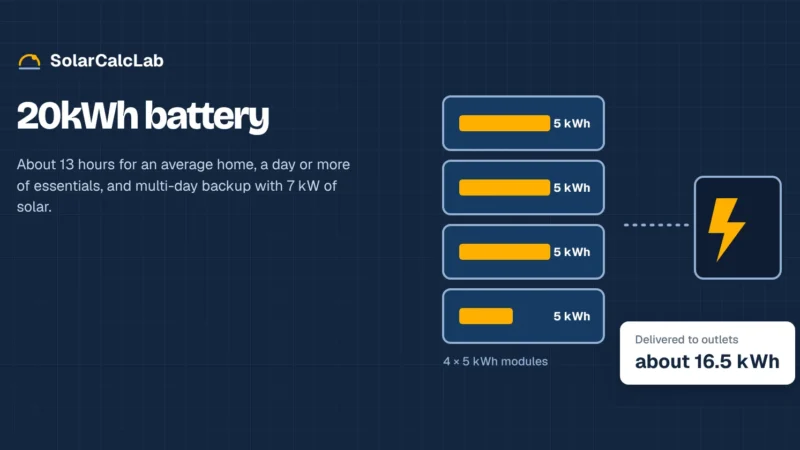
20kWh Battery: Runtime, Cost and Solar Pairing
A 20kWh battery delivers about 16.5 kWh to your outlets. Here is how long that lasts in different homes, how it holds up over a three-night outage with solar, and what it costs in 2026.
Savings, 6 min read
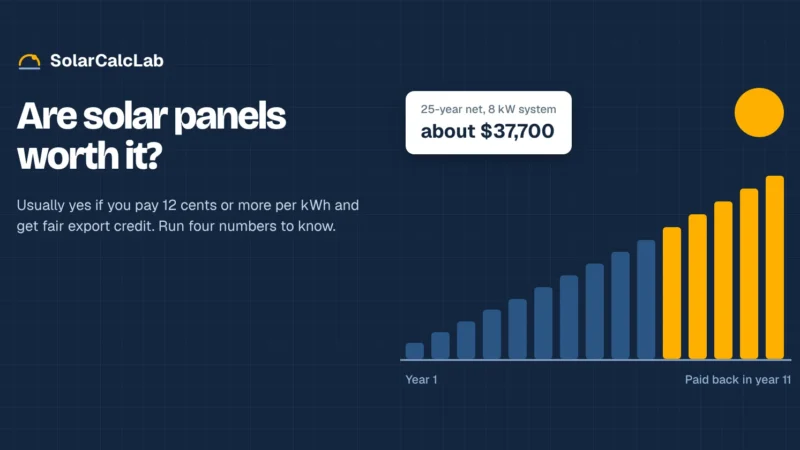
Are Solar Panels Worth It? How to Run the Numbers
Solar is worth it for most homeowners who pay 12 cents or more per kWh and get fair export credit. We run one 8 kW system through five money scenarios over 25 years.
Batteries, 8 min read
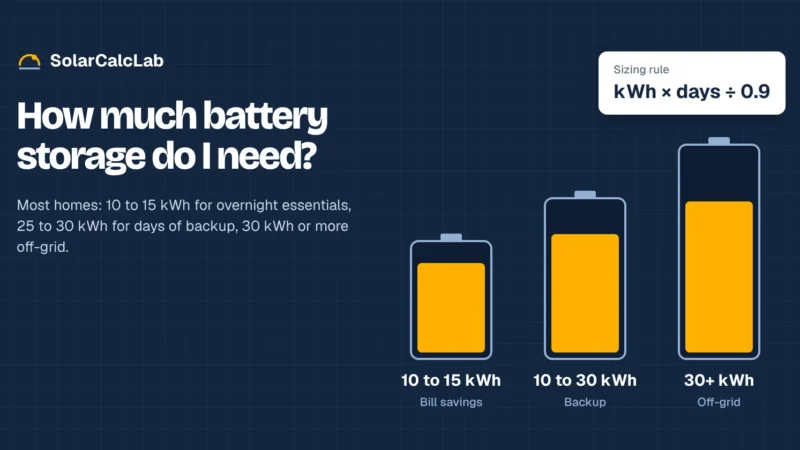
How Much Battery Storage Do I Need for My Home?
Most homes need 10 to 15 kWh of battery storage for overnight essentials and 25 to 30 kWh or more for multi-day backup. Here is how to size yours by goal, load and hours.

Savings, 7 min read
Federal Solar Tax Credit: What Changed and Who Still Qualifies
The 30% Section 25D solar credit ended for homeowner systems completed after 2025. Here is who still benefits: 2025 installs with carryforwards, lease and PPA customers, and state credit programs.

Solar basics, 9 min read
How Accurate Are Solar Calculators and Estimators?
Solar calculators are close on a clear roof, but shade, usage figures and weather cause the big misses. We tested one 8 kW system in six US cities to show where the error comes from.

Savings, 7 min read
How Much Do Solar Panels Cost in 2026?
Residential solar averages about $2.60 per watt in 2026, so most homes pay $16,000 to $36,000 before incentives. Prices by system size and state, extra costs and what changed with the tax credit.

Solar basics, 7 min read
How Many Solar Panels for a 2,000 Sq Ft House?
An average 2,000 sq ft US home needs about 22 solar panels at 430 W, a 9.5 kW system. See how city, heating fuel, an EV and roof space change that number.