Category: Savings
Net metering, export tariffs, payback and how solar saves money.
Savings, 7 min read
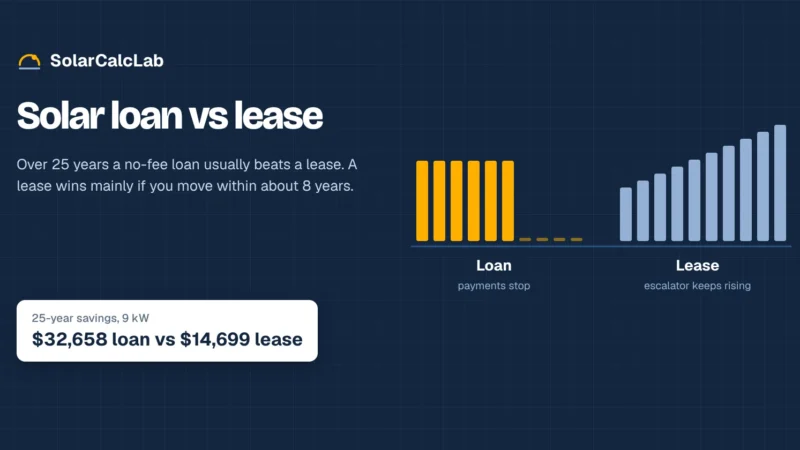
Solar Loan vs Lease: Which Costs Less Over 25 Years?
A 25-year cost comparison of solar loans and leases for the same 9 kW system, including dealer fees, lease escalators, 2026 tax credit rules and selling your home.
Savings, 6 min read
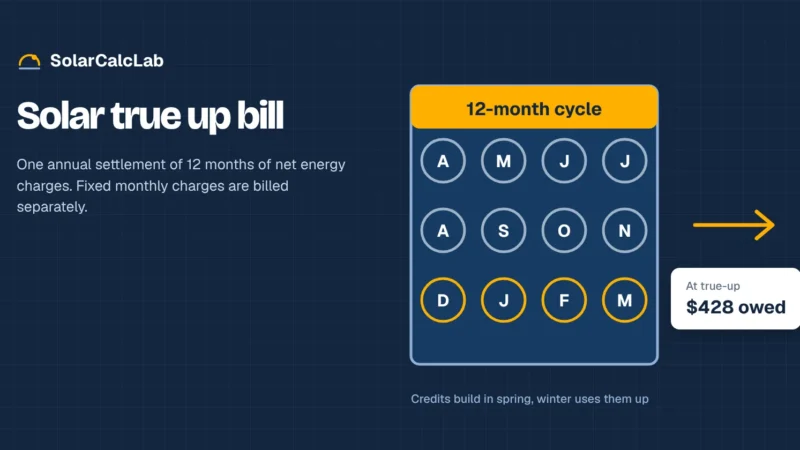
Solar True-Up Bill: What It Is and How to Lower It
A solar true-up bill settles a full year of net metering charges and credits at once. A month-by-month example shows why credits disappear by winter and how to shrink the next bill.
Savings, 7 min read
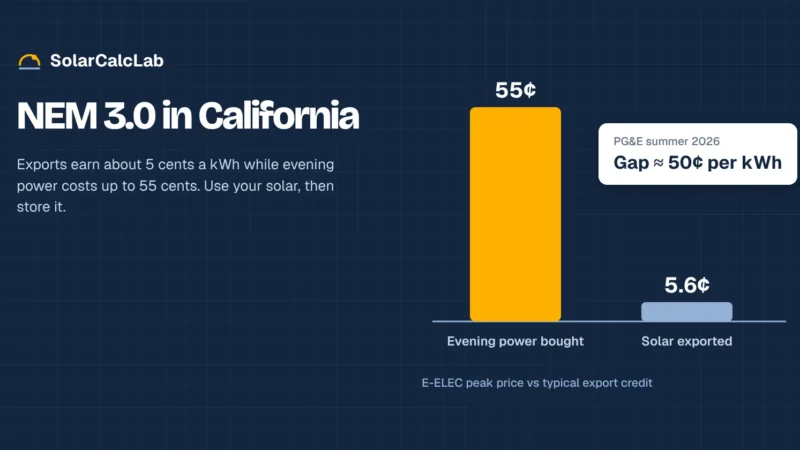
NEM 3.0 in California: What It Means for Solar Owners
California's Net Billing Tariff explained with 2026 PG&E rates: what exports earn, what the ACC Plus adder and new fixed charge do, and when a battery pays off.
Savings, 6 min read
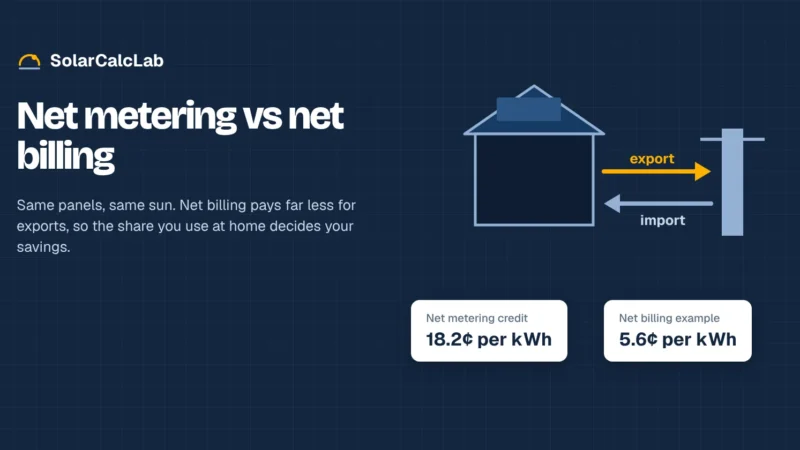
Net Metering vs Net Billing: How Solar Export Credits Differ
How net billing differs from net metering, what the gap does to savings and payback on a 7 kW system, and how to keep more value from your solar.
Savings, 6 min read
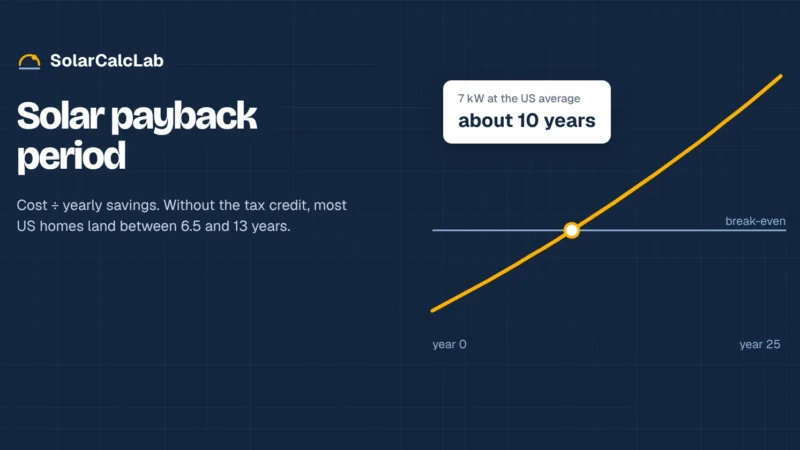
Solar Payback Period: Average Years and How to Calculate It
How to calculate the solar payback period three ways, what it looks like in six US cities with 2026 rates, and how to check an installer's payback estimate.
Savings, 6 min read
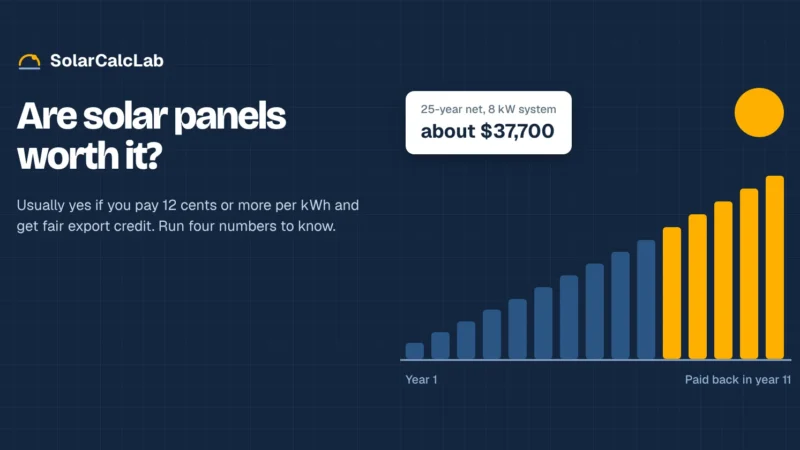
Are Solar Panels Worth It? How to Run the Numbers
Solar is worth it for most homeowners who pay 12 cents or more per kWh and get fair export credit. We run one 8 kW system through five money scenarios over 25 years.

Savings, 7 min read
Federal Solar Tax Credit: What Changed and Who Still Qualifies
The 30% Section 25D solar credit ended for homeowner systems completed after 2025. Here is who still benefits: 2025 installs with carryforwards, lease and PPA customers, and state credit programs.

Savings, 7 min read
How Much Do Solar Panels Cost in 2026?
Residential solar averages about $2.60 per watt in 2026, so most homes pay $16,000 to $36,000 before incentives. Prices by system size and state, extra costs and what changed with the tax credit.

Savings, 9 min read
What Is a Solar PPA? PPA vs Lease vs Buying, With a Cost Comparison
A solar PPA bills you per kWh and a lease charges a fixed fee. See how both compare with buying over 20 years for an example 8 kW home.
Savings, 10 min read
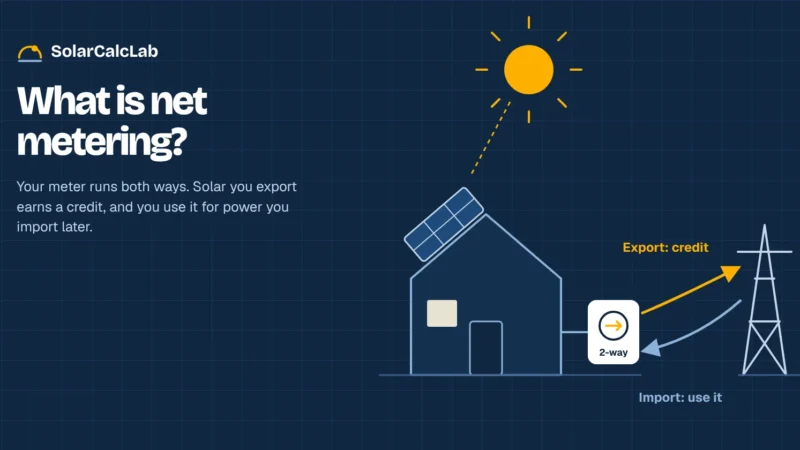
What Is Net Metering and How Does It Work for Solar?
Net metering credits solar owners for power sent to the grid. Learn how credits, true-ups and net billing work, and what NEM 3.0 changed.