Solar guides
Plain-English explainers on solar sizing, costs, batteries and wiring, each linked to a calculator so you can check the numbers.

Energy use, 6 min read
How Many Watts Does a Microwave Use?
A microwave usually draws 1,000 to 1,800 watts from the outlet, well above the cooking power on the label. Here are amps, circuit rules, running cost and inverter sizing.
Solar basics, 7 min read
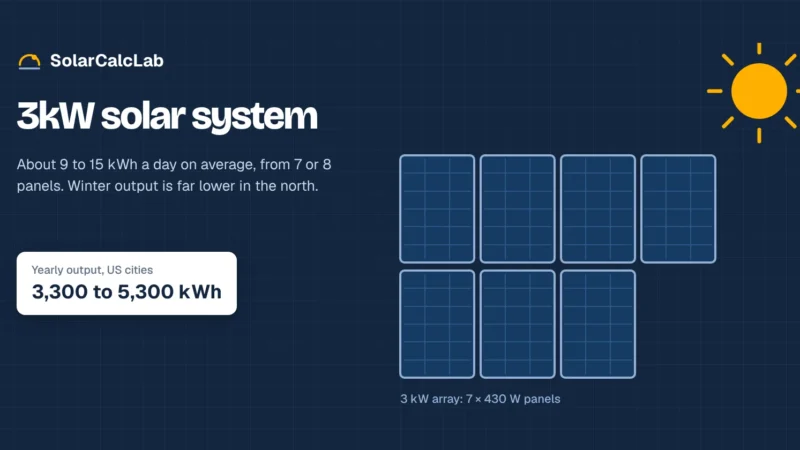
3kW Solar System: Daily kWh, Panels and Typical Cost
A 3kW solar system makes about 3,300 to 5,300 kWh a year in the US. See month-by-month output for seven cities, panel count, DIY kit vs installed cost, payback and off-grid sizing.
Energy use, 6 min read
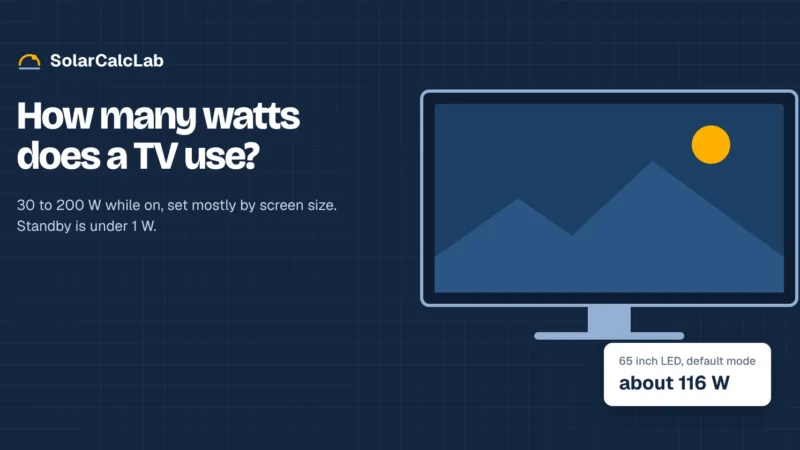
How Many Watts Does a TV Use? Measured Data by Screen Size
Measured ENERGY STAR data shows a 55 inch LED TV uses about 84 W and a 65 inch about 116 W. See OLED vs LED, yearly cost, standby power and runtime on a battery.
Solar basics, 7 min read
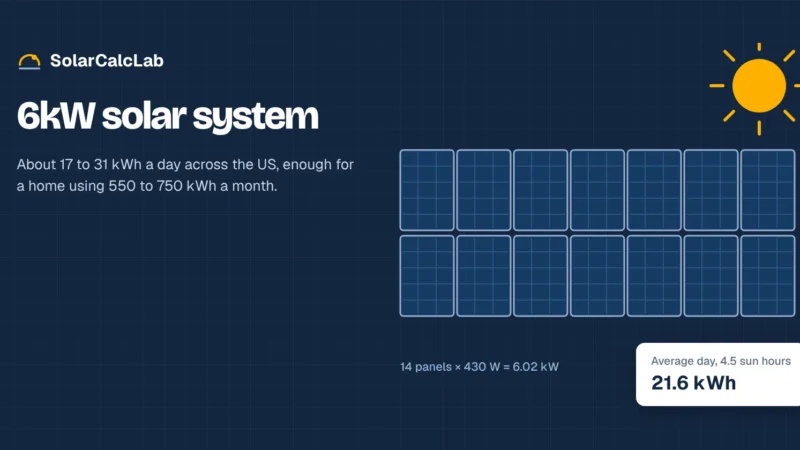
6kW Solar System: Output, Panel Count and What It Can Run
A 6kW solar system averages about 21.6 kWh a day at 4.5 sun hours. See what it can run, how many panels it takes, the inverter choice and cost per kWh.

Solar basics, 7 min read
5kW Solar System: Daily Output, Panels Needed and 2026 Cost
A 5kW solar system makes about 5,500 to 8,000 kWh a year from 12 panels at 430 W. See what it runs, roof space, 2026 cost and payback.

Energy use, 7 min read
How Many Watts Does an Air Conditioner Use? By Type and Size
A central air conditioner uses about 1,400 to 6,000 watts, with a typical 3 ton unit near 3,300 W. See window, portable and mini split wattage, startup surge, kWh per day and running costs.

Energy use, 7 min read
Appliance Wattage Chart: How Many Watts Common Appliances Use
Running watts, starting watts and daily kWh for 33 common household appliances, plus how many watts an average US house uses and how to calculate cost.
Solar basics, 7 min read
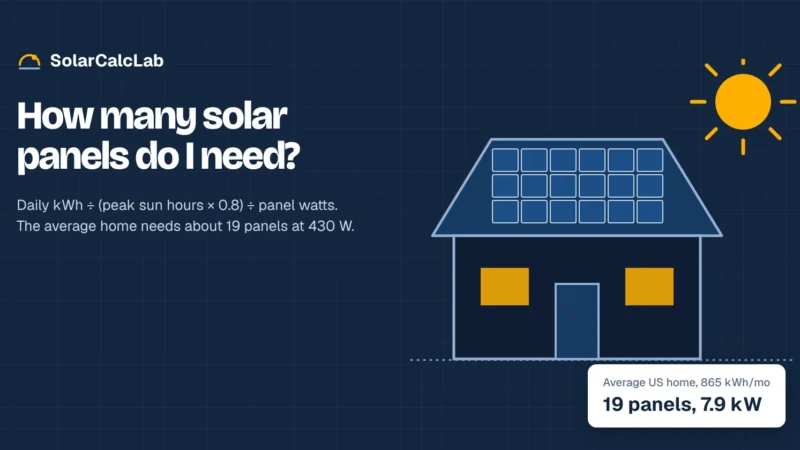
How Many Solar Panels Do I Need? Sizing Guide With Examples
The average US home using 865 kWh a month needs about 19 solar panels at 430 W, a 7.9 kW system. Here is the formula, panel counts by bill and city, and worked examples.

Wiring and electrical, 7 min read
4 Gauge Wire Amp Rating: How Many Amps Can 4 AWG Carry?
4 AWG copper is rated 70 A at 60°C, 85 A at 75°C and 95 A at 90°C. See which rating applies to NM-B, THHN and aluminum, the right breaker, derating and voltage drop.

Batteries, 8 min read
Batteries in Series vs Parallel: Voltage, Capacity and Which to Use
Series adds voltage and parallel adds amp-hours: two 12V 100Ah batteries make 24V 100Ah or 12V 200Ah. See configurations, current and cable losses, and wiring rules.

Solar basics, 7 min read
Monocrystalline vs Polycrystalline Solar Panels: Efficiency, Cost and Which to Buy
Monocrystalline panels are 20% to 24% efficient against 15% to 17% for polycrystalline, handle heat better and need less roof. Here is how they compare on cost, space and cell type in 2026.

Solar basics, 7 min read
Pure Sine Wave vs Modified Sine Wave Inverter: Which Do You Need?
Pure sine wave inverters make grid-quality power with under 3% distortion, while modified sine wave units run 30% or more and make motors, CPAPs and chargers run hot. Here is how they compare on THD, efficiency, price and sizing.